
In the unpredictable world of wildlife care, challenges are a constant. A dedicated team faced these challenges head-on during a rescue mission in Mount Kenya, where they worked tirelessly for four days to save a young elephant trapped in a snare.
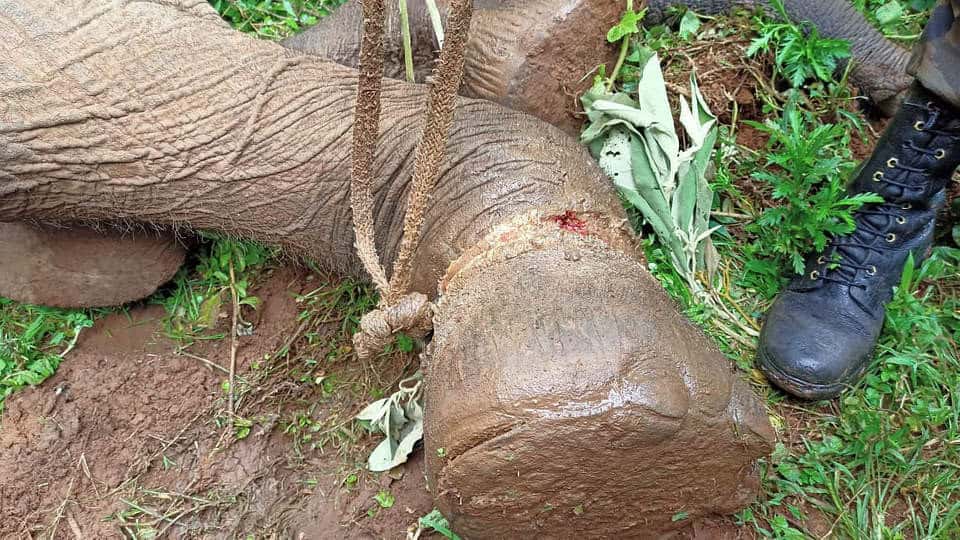
The rescue operation began on January 20th when rangers from the Kenya Wildlife Service (KWS) discovered a young bull elephant caught in a thick rope.
The SWT/KWS Mount Kenya Mobile Veterinary Unit quickly responded, launching a search that led them to the elephant by evening.
However, the dense terrain and the elephant’s aggressive behavior made completing the rescue on the first attempt impossible.
Undeterred by the initial setback, the team called for reinforcements the following day, bringing in the Sky Vets initiative for aerial support.
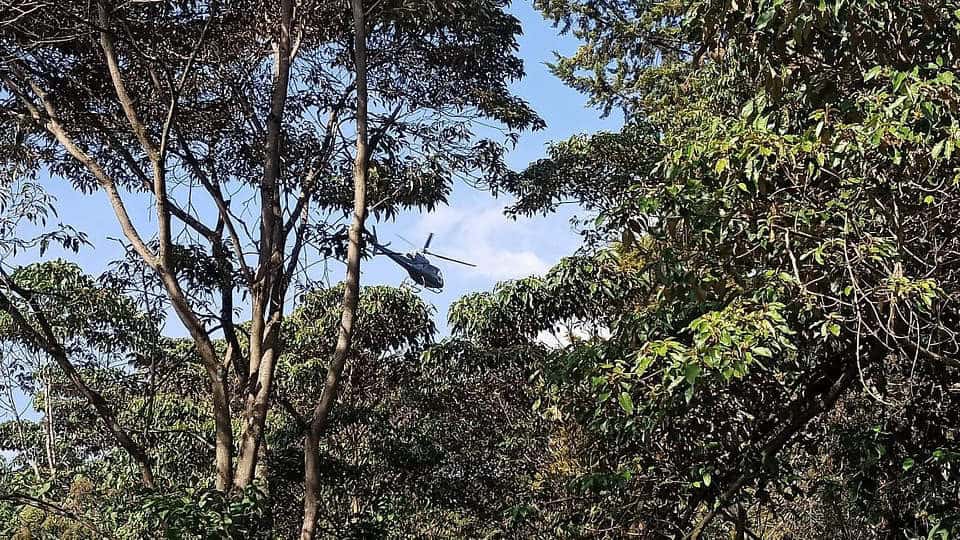
A helicopter was dispatched to pick up KWS veterinarian Dr. Njoroge from a remote patch in the swampland.
The plan was to dart the elephant from the air, but once again, dense vegetation hindered their efforts.
Despite spotting the elephant, the thick forest made it impossible to get close enough to administer treatment.
Ground teams struggled to keep up as the elephant retreated deeper into the forest, making the situation increasingly challenging.
On January 22nd, at dawn, KWS Mount Kenya Rangers, wildlife scouts, and forest rangers set out on foot to find the elephant.
A fixed-wing airplane was also deployed to assist with the search. Although the elephant was located, he remained deep in the forest, out of reach for treatment.
The pilot recorded the GPS coordinates, allowing the ground teams to monitor the elephant’s movements and wait for an opportunity to intervene.
Finally, on the fourth day, the elephant moved to a water hole in a more accessible part of the forest, and the team sprang into action. Now in considerable pain, the elephant had become highly aggressive and retreated into the thick bushes again.
Determined not to give up, the team waded across rivers and navigated swamps to stay close to him.
With the situation growing increasingly dangerous, the team devised a plan to anesthetize the elephant from the safety of a treetop.
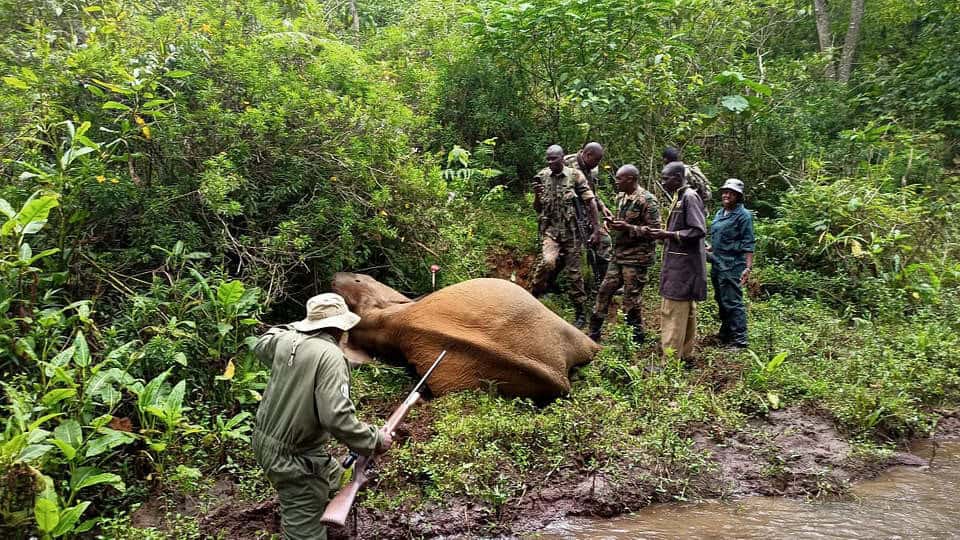
Positioned 20 meters above the ground, Dr. Njoroge and a ranger patiently waited for their chance. When the moment arrived, Dr. Njoroge successfully darted the elephant.
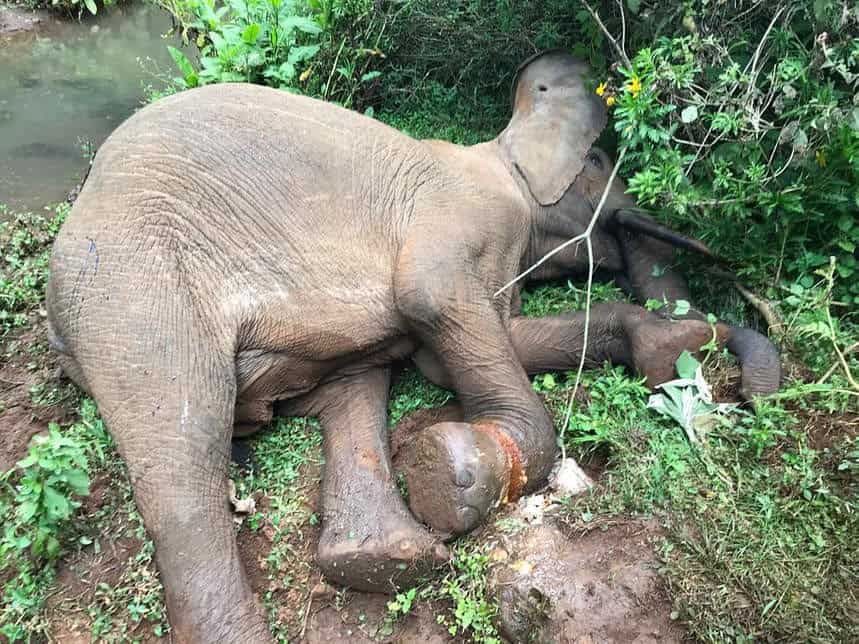
The anesthesia took time, requiring a 15-minute trek through the bush before the elephant finally succumbed near a stream.
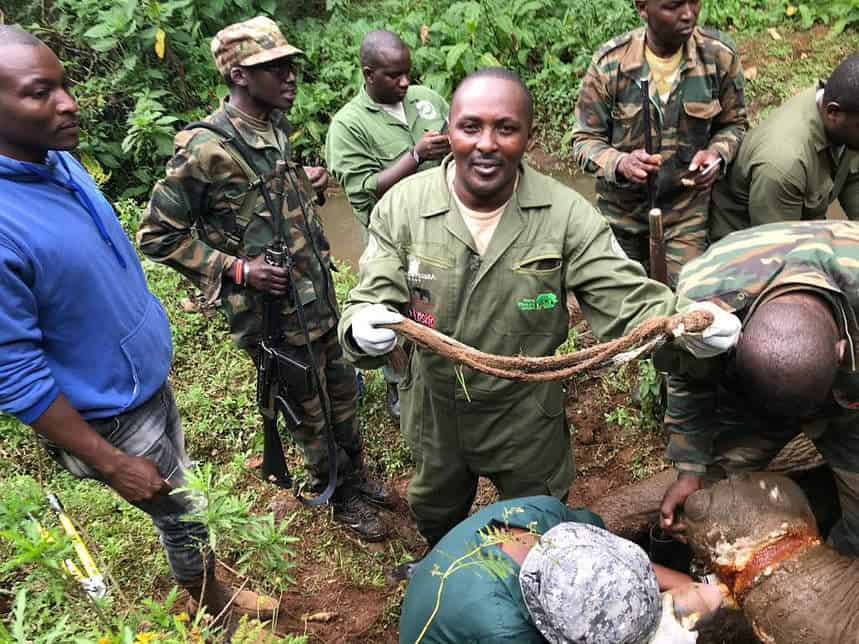
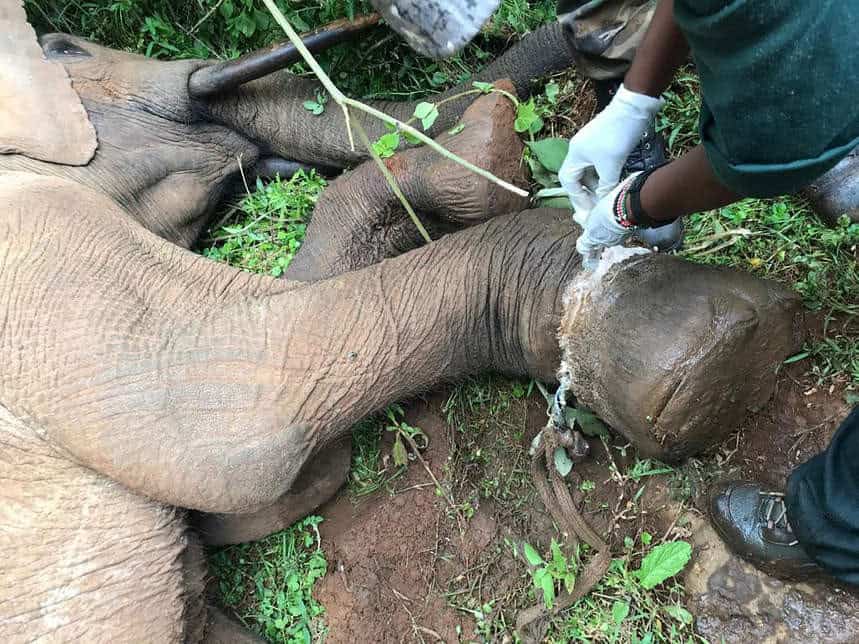
After four intense days, the actual treatment took just half an hour. The team carefully removed the snare, which had cut deeply into the elephant’s leg, causing severe abrasions and a septic wound.
They cleaned the wound thoroughly, excised dead tissue, and applied topical and intramuscular medications, including antibiotics, to promote healing.
Once the anesthesia was reversed, the elephant stood up after four minutes and wandered back into the bush. Monitoring teams will track his recovery over the next two weeks, hoping for a positive outcome.
At just 15 years old, this young bull, still years away from his prime, narrowly escaped a tragic fate thanks to the unwavering dedication of the rescue team. Their perseverance gave him a second chance at a long and healthy life.
Read more Elephant News.


