
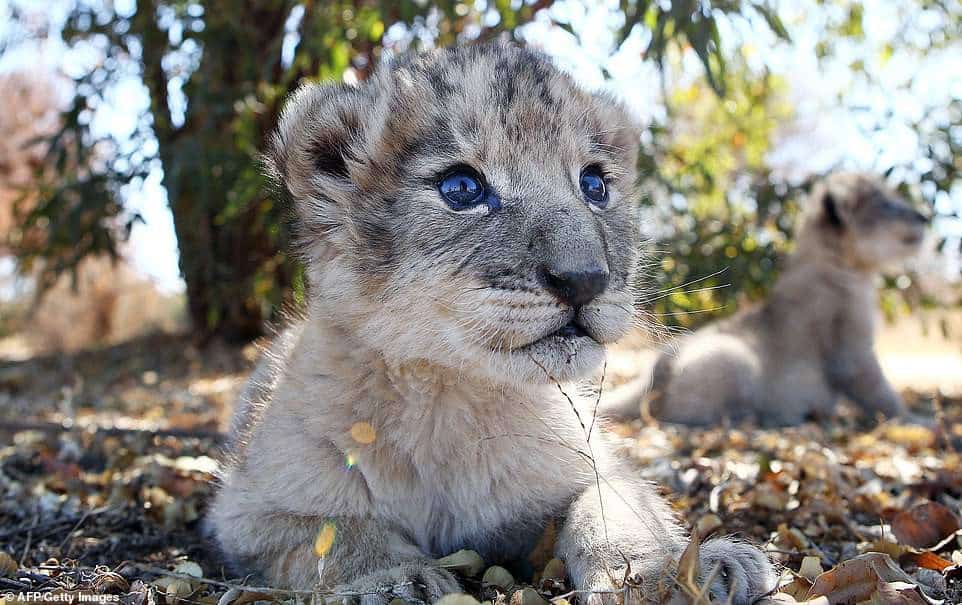
In a significant breakthrough for wildlife conservation, Victor and Isabel, the world’s first lion cubs born through artificial insemination, have arrived at the Ukutula Private Game Conservation Center in South Africa.
This milestone provides a hopeful outlook for the future of lions, whose populations are rapidly declining across Africa.

Over the last 20 years, lion numbers in the wild have dropped by 43%, leaving only about 20,000 lions today.
This dramatic decrease highlights the urgent need for innovative conservation methods to prevent extinction.

Victor and Isabel’s birth, following an 18-month intensive trial, demonstrates the potential of artificial insemination to help restore lion populations.
Aysa, the lioness mother, successfully gave birth using sperm from a healthy lion, marking a pivotal moment in conservation history.
The success of this procedure could have far-reaching benefits for other endangered big cat species, such as tigers and snow leopards, which face similar threats of extinction. Scientists believe artificial insemination could be crucial in preserving these species.

However, this development has sparked a debate within the conservation community. Some experts see artificial insemination as a critical tool for conservation, while others worry about the ethical implications and potential misuse associated with captive lion breeding in South Africa.
Critics argue that the industry often prioritizes profit over genuine conservation, leading to harmful practices like lion cub petting and canned trophy hunting.
Supporters of artificial insemination highlight its potential to enhance conservation efforts by preserving genetic diversity and addressing challenges such as habitat loss and human-wildlife conflict. They believe that cutting-edge reproductive technologies could be vital in protecting threatened species.

Victor and Isabel’s playful presence under the African sun symbolizes hope and a call to action.
Their birth underscores the importance of collaborative efforts to conserve the remaining lion populations, ensuring these magnificent creatures continue to grace the African plains for future generations.


Read more Wildlife News.


