
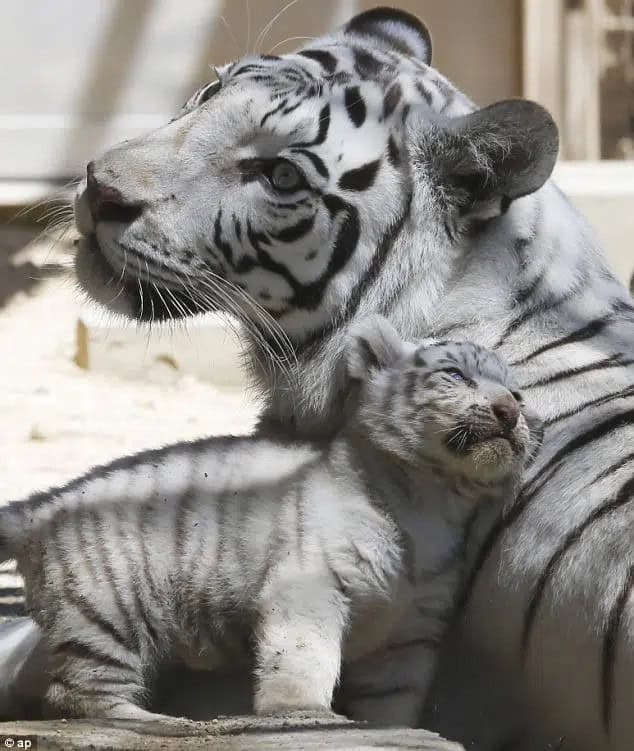
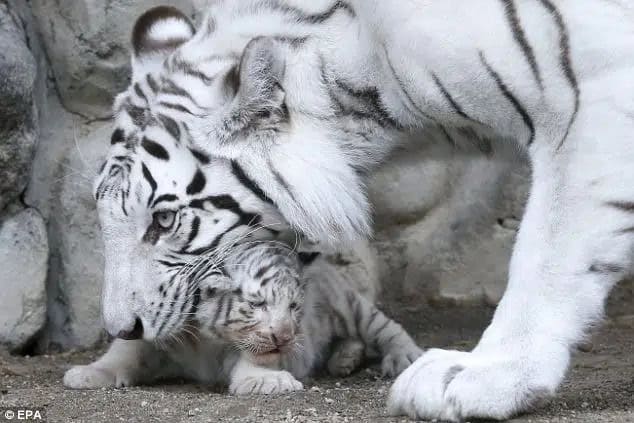
In an endearing scene that captivated visitors, four rare white tiger cubs made their debut at Tobu Zoo in Tokyo, Japan.
Born a month and a half ago to their seven-year-old mother, Karla, the cubs charmed the crowds, who waited over an hour to catch a glimpse of these magnificent creatures.
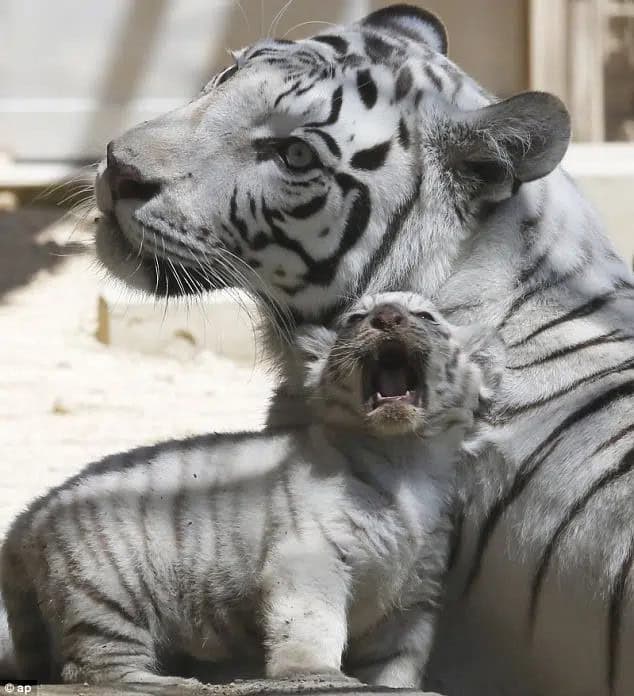
The cubs, measuring between 11 and 16 inches and weighing about 11 pounds, add to the global population of only around 250 white tigers.
These Bengal tigers, known for their snowy white coats and blue eyes, owe their unique appearance to a genetic anomaly.
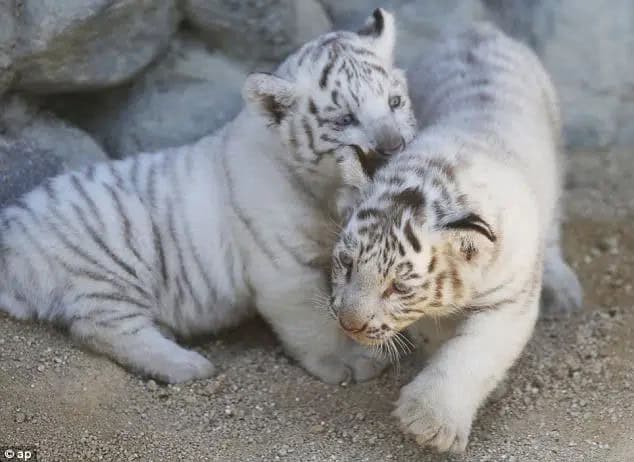
White tigers are a natural, though rare, variation, and their presence in zoos offers a unique opportunity for the public to appreciate these beautiful animals.
As the cubs playfully explored their enclosure under Karla’s watchful eye, visitors were visibly thrilled. Their delicate beauty and the close bond with their mother evoked a sense of wonder.
Yusuke Terada, an architect who attended the event, shared his joy: “Seeing such small babies, I became very happy.
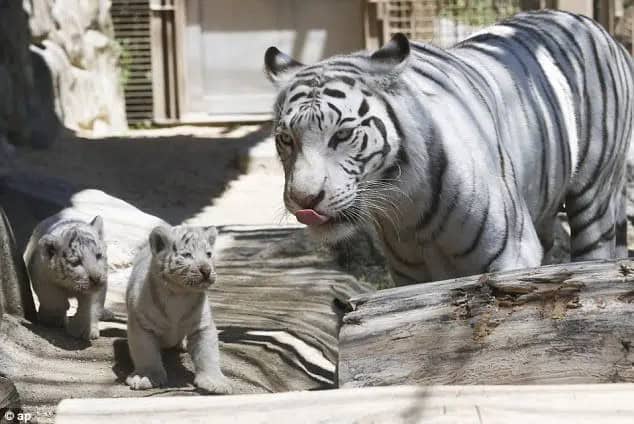
And when I saw three of the baby tigers playing and their mother watching over them from nearby, I thought, what a nice family.”
Despite their cute appearance, these cubs are descendants of powerful predators. As they grow, they will develop the skills of their wild counterparts. Their striking white coats make them an unforgettable sight for visitors.
While the cubs enjoyed the attention, their father, Rocky, was still adjusting to his new role. Seeing his offspring for the first time from a neighboring cage, Rocky showed curiosity and intrigue, as noted by zookeeper Hiroki Itakura.
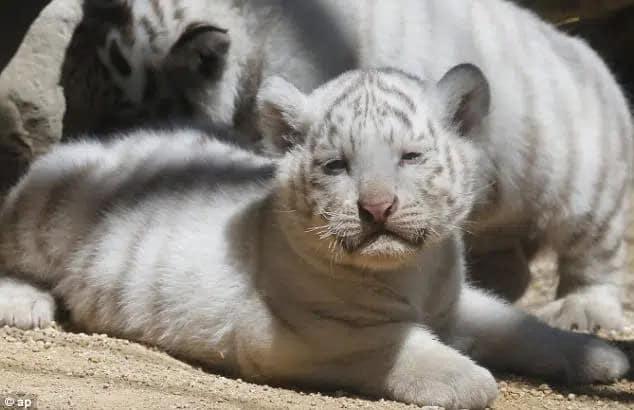
The appearance of these cubs highlights conservation efforts aimed at protecting endangered species.
While white tigers are captivating, conservationists stress the importance of focusing on other tiger varieties also facing extinction.
The first public appearance of these white tiger cubs underscores the role of zoos like Tobu Zoo in educating the public about wildlife conservation. This event will likely inspire visitors to cherish and protect these magnificent creatures and their habitats.
Read more Wildlife News.


