
In a daring rescue operation on February 15, 2016, the Meru Veterinary Unit swiftly responded to distress signals from Elsas Lodge in Meru National Park.
The team was alerted to a young male elephant grappling with a sizable and infected swelling on its lower abdomen.
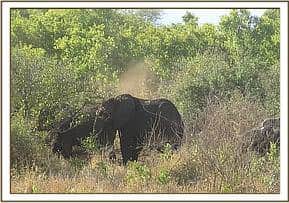
Undertaking a meticulous search within a group of four young males, the Vet Team successfully located the ailing elephant on February 16, 2017, at 2:30 pm, with crucial support from tour drivers.
The distressed pachyderm was found taking refuge in a rocky area near the lodge, prompting the team to act swiftly.
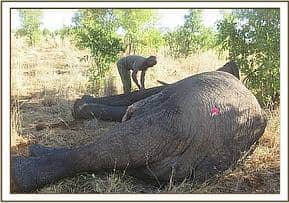
The elephant was tranquilized to facilitate treatment as it moved into a more open grassland terrain.
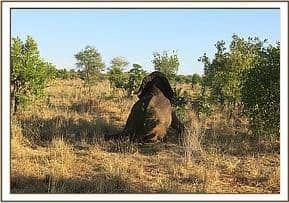
Using Captivon administered via a 3cc Dan-Inject dart into the muscles of the left buttock, the immobilization process took approximately 8 minutes, causing the elephant to fall gently onto its right side.
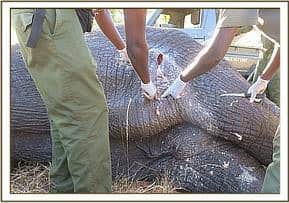
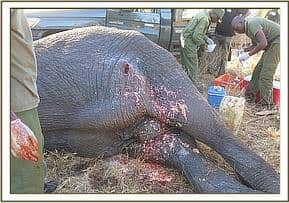
A distressing abscess on the underside of the elephant’s abdomen was discovered during the examination.
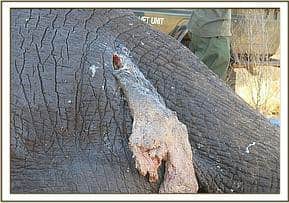
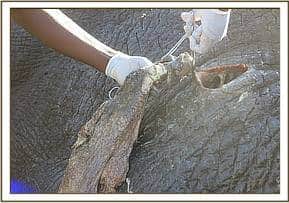
Pus was visibly oozing from a sinus tract opening on the upper side of the abscess, accompanied by hanging necrotic tissue.
Unfortunately, the exact cause of the injury remained elusive to the veterinary team.
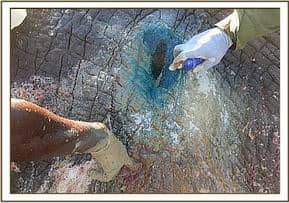
The intervention involved making an incision on the abscess, releasing the accumulated pus, removing dead tissue, and treating the area with iodine antiseptic. A green clay substance was also applied.
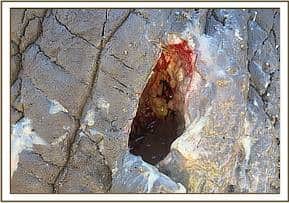
The team administered an antibiotic and anti-inflammatory injection through the muscle route to combat infections and reduce inflammation.
To counteract the immobilizing effects of the tranquilizer, a solution of Naltrexone hydrochloride was administered through the superficial ear vein.
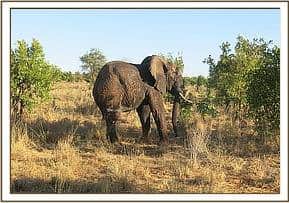
Astonishingly, within two minutes of the antidote injection, the elephant displayed signs of recovery, managing to stand on its own.
Despite the challenging circumstances, the veterinarian is optimistic about the elephant’s chances of recovery.
A second treatment is planned in two weeks, and the elephant will be closely monitored throughout the healing process.
Read more Elephant News.


